

The Hut


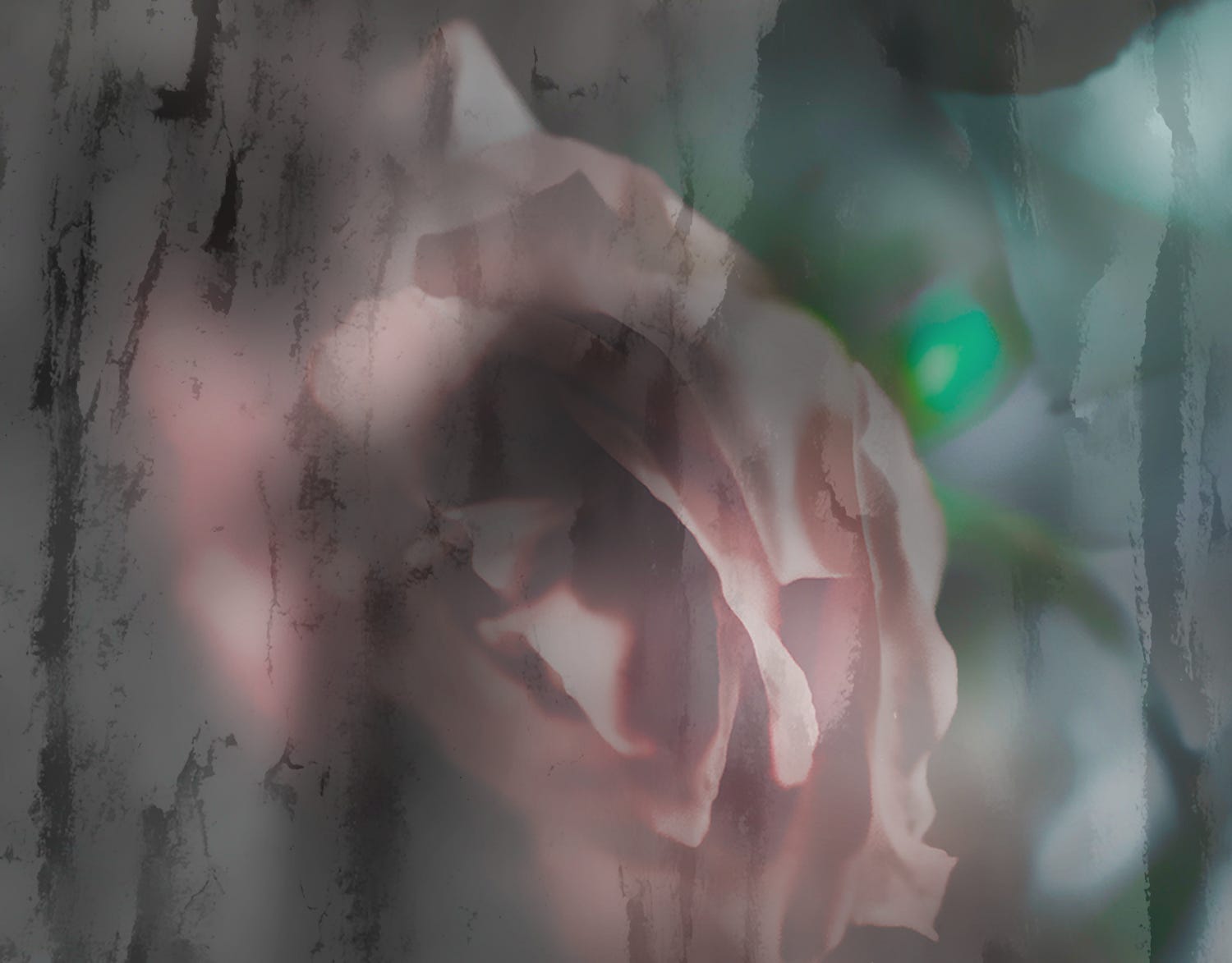

No one knew when it was built.
It was ancient
Born of earth.
Breathing earth.
It was always there, some said.
Shelter under rock ledge.
Simply named The Hut.
Over centuries,
walls appeared,
then a door,
a window,
a hearth.
No one knew who tended it.
Yet The Hut was always cared for.
When an old monk arrived,
he added fence and garden,
cultivating rich soil for planting.
He pondered The Hut.
Walls,
stone and earth.
Oak door,
iron hinges and lock.
Sitting on his haunches, he smiled.
Then he laughed aloud,
then he rolled in the grass laughing,
then laughing still until tears spilled,
and, finally—
laughing more at what was fathomless.
yes, yes, it just is
Many seasons unfolded.
The monk grew frail.
Still, on thin legs,
he carried buckets of water
from stream to Hut.
For the seedlings.
One day,
he walked to gather brushwood for a gate.
He chose each piece with care.
He placed the brushwood on the ground.
Where the gate would stand.
On another day, the monk placed his food bowl on the table;
his staff, against the door.
Removing robes, he folded them over the fence.
Naked, he walked deep into the forest—
smiling.
Freezing winters.
Icicles hung low over The Hut.
Snows of beauty; snows of violence.
Summer’s heat baked earth and stone.
Storms flooded,
lightning strikes broke ancient trees.
Autumn’s rain and crimson leaves,
cooled the world.
The Hut still stood.
One late autumn,
gold, russet, red leaves fell,
carpeting the forest floor.
It was at this time,
a physician wandered off his path.
Cold, hungry, half drunk.
Near the path lay a rusted iron latch,
half-buried in leaves.
He picked it up without thinking,
and carried it with him.
The Hut waited.
Still.
Silent.
Hello, there? Hello?
He did not enter.
Caution.
Fear of what might be.
He was chilled, feverish.
Leaning against a red maple,
his hands shook.
He slid down the tree.
Soft, moss-covered earth received him.
He drank from the bottle.
Stared at the full moon.
These damn falling leaves sound like drums.
He slept fitfully.
She was five years old.
My hands failed.
He jolted up, raging at the moon, the stars.
He yelled obscenities at his God.
He wept, he drank.
The bottle emptied.
He dropped the bottle
into the brushwood.
The latch slipped
into the leaves.
He walked to The Hut.
Stopped.
Passed out at the threshold.
Morning sun woke him.
Bleary-eyed,
retching,
hammers pounding in his head.
Fever, tremors.
I cannot enter.
But maybe a bottle?
He gathered strength,
turned the handle that did not turn.
The Hut did not yield.
He remembered a pond or lake.
Jumped into its clear water.
Rinsed himself, his clothes.
He tried avoiding The Hut—
it unsettled him.
He came to a fork in the path,
guessing direction.
The Hut again.
The physician coughed in spasms,
blood on the ground.
His eyes slowly closed;
knowingly.
He no longer thought of the bottle.
He no longer felt pain.
Perhaps I should try again.
Turn the knob,
maybe sleep.
He walked to the door,
the handle started to turn.
Suddenly, his hands lifted.
No.
He sat for the morning,
leaning against The Hut’s warm stone.
His cough, deep; a wet patch beside him.
Life ebbing in hours or minutes.
Leaves fell,
not like drums.
Their sound soothed;
the scent of swaying pines,
cleared his fog.
He inhaled—
spasms,
cracked ribs.
Why here?
A tradesman passed The Hut.
The physician had no identification.
They buried him in the village graveyard.
No one ever knew.
Only The Hut.
Decades passed.
The Hut stood in silence.
Patience, too.
Grief has its own time.
On one summer day,
a song was sung,
a Scottish lilt heard.
A large man belonged to the song,
and the lilt—
a woodcutter who no longer cut wood.
He stood before The Hut,
assessed its presence,
chores needing tending.
Brushwood, bundled, tied.
He knew it wanted to become.
You’ve waited a long time, my friends.
When he was young,
he cut trees for timber.
One winter he split a fallen trunk
and saw the grain open into wings.
After that,
he preferred fallen wood.
He began whittling small things.
A flute—
only six holes,
in his pocket,
always.
As he carefully built the brushwood gate,
he thought about his larger sculptures.
A modest man, he just smiled.
Near the bundled wood
he noticed the iron latch.
Rusted, but sound.
He cleaned it slowly
and fitted it to the gate.
Ha! You are done.
The gate was delicate in appearance,
but strong.
An old monk had chosen each piece.
A large man with gentle hands
gave it purpose.
The woodcutter looked around.
He sanded the window panes,
applied his oils.
He spent days on the oak entrance door,
sanding it to its natural grain,
sealing it with his sculpting oils.
How the oak door gleamed;
each grain smiled back as he sang.
He entered The Hut.
Of course, you are feminine.
He studied the stone walls:
drawings, poems, paintings, glyphs.
Humming, pondering.
Not a song yet, for this special lady.
The right one would come to him soon,
her melody hesitant.
He considered sealing the stone walls.
His hands, then his ear, pressed on the walls.
Ah—yes.
Perfection as is.
He looked at the hearth.
Nothing hung above it.
Shall I chisel into the stone, ‘The Hut’?
The Hut was silent.
Okay, then, shall I carve a wooden sign?
He heard an exhale—yes.
His hands chiseled into rare wood,
white with soft golden grain.
His tools yielded to his touch.
There was melody in the work;
presence in the sign.
The woodcutter looked around—
he left all he could give.
Except—:
he pulled the flute from his pocket,
stood center room,
played a winsome tune,
one he didn’t know.
it was my honor to serve you
Only several seasons passed,
when sandaled feet stepped carefully
across the stream’s rocks.
Edges of her long maroon robe,
dragging through water.
The woman stopped,
reaching moss-covered ground,
blanketed with crimson leaves.
Autumn splendor reigned.
The sun warmed her bald head.
She touched it, smiling.
Walking the moss-laden path,
she listened.
Moving slowly
each step a deliberate action.
Myriad scents mingled.
Pungent. Sweet.
She saw The Hut
and breathed recognition.
Stepping through the gate,
the latch squeaked, almost a cry.
She made a mental note—
repair.
Ah—the gardens, plentiful enough.
She approached the threshold,
the door waited.
The woman passed her hand across her bald head
one more time.
She bent, unfastened her sandals,
left them in neat order,
at the threshold.
She opened the door,
slowly walking into the room.
Tradition taught her to bow her head.
She did.
Her eyes inhaled the one-room.
Time would reveal its details.
She did note one corner table,
a candlelit lantern ready to light.
Calligraphy brushes,
a variety of rice paper.
She held one brush and another,
touched their bristles,
lifted the ink stone,
smelled liquid India ink.
She removed her stamp from her robes.
Yes, this is good.
She turned to the woodstove,
readied for use.
Struck the match, lit the fire.
The kettle, set to boil for tea.
The woman did not delay her next action—
she unwrapped her robes,
watching them fall to the floor.
Jeans and T-shirt now,
her only wardrobe.
She carefully folded the robes—
set them aside for some other use.
The woman lived easily in The Hut;
she chopped wood, carried water.
Her chores, dedicated to mornings.
Her afternoons, devoted to practice.
She brushed poems,
painted,
sketched.
Daily at dusk,
she walked to the stream.
She talked, listened, breathed with it—
a companion.
On one such day,
when edges of light and dark
fold into one another,
she spotted a bowl in a thicket of weeds.
Cracked, misshapen with age,
she washed it, wiped it clean.
Before the hearth that night,
she sanded lightly,
grain shone through.
She thought,
I will use this bowl for food.
Worn and weathered—
still of noble stock.
The woman was forty years old
when she crossed The Hut’s threshold.
Her hair grew long, black—
like silk.
Seasons unfolded,
the woman did, too.
She matched her heartbeat
with the stream’s; all nature.
She nurtured the land,
gardens expanded.
She shared harvest with others.
Her life—
Poor.
Quiet.
Simple.
Forty years later,
threads of silver streaked her hair.
She sat at the stream and listened.
No reason to speak anymore.
Answers, questions were hers, within.
At dusk, she brought a lotus flower,
placing it beside her.
She sat through the night,
listening.
She returned to The Hut at dawn.
The sky, swaths of color.
She breathed scents of pine,
dewy moss—
the last rose.
Opening the gate,
the latch cried.
She removed her sandals
before opening the door.
A breeze followed,
scattering crimson leaves across the floor.
She noted the leaves, smiling.
Placed the kettle on the stove.
Stoked coals.
Added a log.
Later that day,
tea steeped.
Sun’s long shadows streamed through the open door.
The woman sketched scattered crimson leaves …
The gate latch cried again.
She set the sketch aside.
Sakura walked to the gate.
Dear one, forty years is a long time.
She rubbed oil into the iron
until the latch moved easily once more.
She made a small bow to The Hut—:
latch,
brushwood gate,
monk,
physician,
and the woodcutter.
She knew them all.
Dōmo arigatō

About the Art
Title: ‘The Last Rose’
Copyright: 2006/2026 (Remastered)
Artist: Lee Anne Morgan