Standing in Understanding
A parable, a river, and what remains.

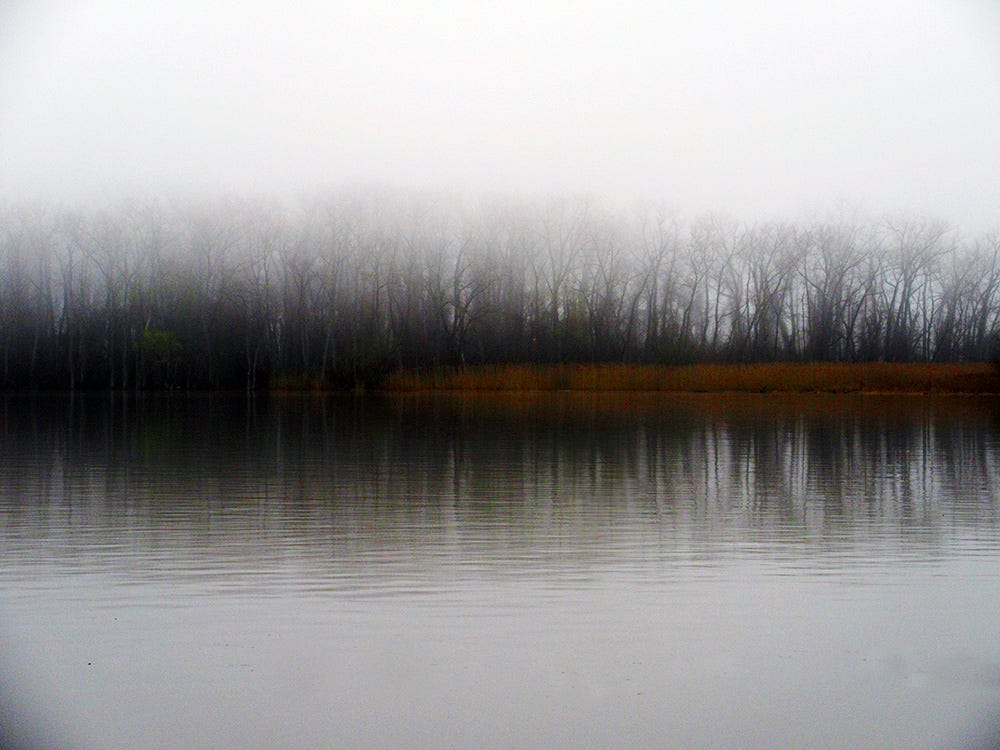
(“When Siddhartha listened attentively to the river, to this song of a thousand voices; when he did not listen to the sorrow or laughter, when he did not bind his soul to any one particular voice and absorb it into his Self, but heard them all, the whole, the unity; then the great song of a thousand voices consisted of one word: Om — perfection.”) ~ Hermann Hesse, Siddhartha
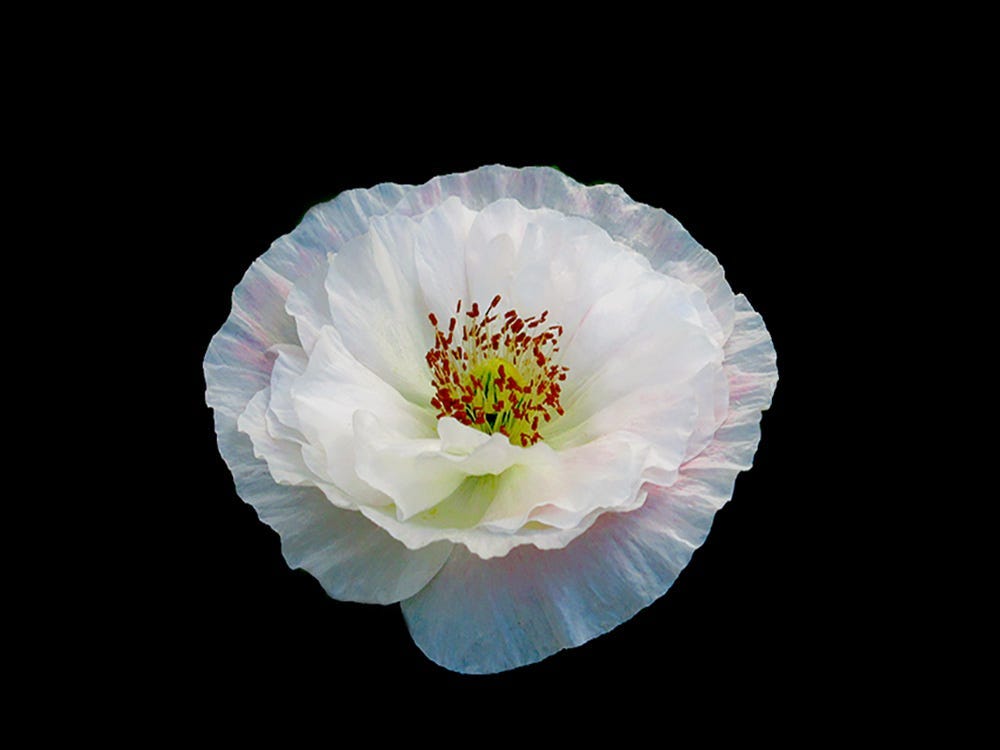
(She stood alone in flawless beauty. I wondered if I imagined her, for after a heavy rainstorm through the night, she existed no more. No, she was there—and will return—again and again.)
My friend Scott called to say that his supplemental insurance had been canceled—Obamacare. Scott has a heart condition requiring hospital visits and expensive medications. My neighbors, all seniors, have lost their SNAP benefits (formerly known as Food Stamps) and their supplemental insurance.
Oh my heart—what could I do? Listen. Deeply.
It’s messy. Fear rides the Pale Horse. We cannot easily step outside of the vortex of fear, especially with addictive phone/notepad swiping, Facebook, and 24/7 media. This is our reality, and I do not propose platitudes—God, no.
Why the two images above? They understand what we forgot to remember.
Siddhartha listened to all the river’s voices—through many seasons and its ever-changing flow—its unending continuity. He sat in stillness, and at last heard it: not a sound the ear could claim, but the one that breathed before all others—the note before creation stirred. Some call it Om, the soundless origin from which every voice begins.
The flower? She was at peace with her brief, flawless moment in bloom, for she knew she would return again. These simple things—a river’s songs, one perfect blossom—are holy, for they represent the natural order of all things: people, places, and most assuredly, the cosmos.
We die a little every day; cells surrender, others awaken.
Change isn’t a tragedy; it’s the design.
The pain comes only from our refusal to see it that way.
A long, long time ago, a simple story—a parable—was born, becoming a foundational teaching among several religions. You’ve likely met this story somewhere along the way; still, it asks to be heard again.
The teaching, of course, ends with maybe—no resolution—because that’s the point.

A farmer’s horse runs away. The neighbors come to console him: “What bad luck!”
The farmer says, “Maybe.”
A few days later, the horse returns, bringing with it three wild horses. The neighbors rejoice: “What good luck!”
The farmer says, “Maybe.”
His son tries to ride one of the wild horses, is thrown, and breaks his leg. The neighbors lament, “What bad luck!”
The farmer says, “Maybe.”
Soon after, soldiers come through the village to conscript young men for war. They see the son’s broken leg and pass him by. The neighbors say, “What good luck!”
The farmer says, “Maybe.”
The trouble is this: when we’re inside the darkness—and we are—it feels endless.
Standing inside uncertainty without trying to label it as good or bad is not only a matter of understanding; it is also about trusting that what appears to be ruin may, in time, reveal grace.
We can choose to ride the Pale Horse of fear and destruction. Or, we can stand in understanding—not to control it, not to predict it, but to meet it with open eyes, and a steady heart.
Not to go all Leonard Cohen on you, but: We are broken, yes, but we are not beyond repair. The work is to hold the fragments in our hands and still see the light coming through the cracks.
Stars collapse, and dust becomes new stars.
Change isn’t a tragedy; it’s the design. The pain comes only from our refusal to see it that way.

Puck Says -
I don’t know much about impermanence. I just know mornings smell different every day, and that’s reason enough to rise.
Lee Anne talks about change on a higher frequency, but to me, it’s just the air moving. I lose a ball, I find another. The leaves fall, then I get to run through them.
Humans like to name things—blessing, loss, miracle, mistake. I only know that when I sit still, I can hear everything breathing: her, the river, even the clouds.
That’s the understanding I stand in.